

Cold open
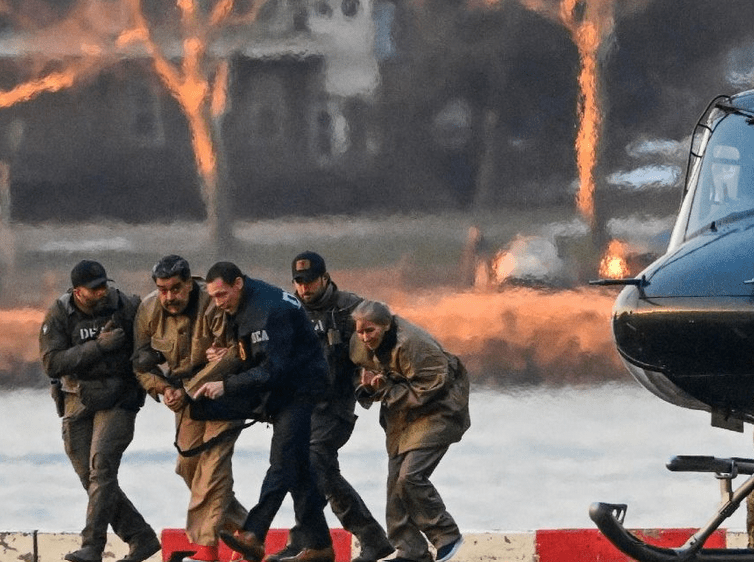
On January 3, 2026, while most of the world was still hungover from New Year’s, the United States military bombed Caracas, extracted President Nicolás Maduro in handcuffs, and flew him to New York to face narco‑terrorism charges. Five days later, the White House announced it would control Venezuelan oil sales “indefinitely” and decide how the proceeds get spent. Call it what it is: regime change as a subscription service.
New features
- Oil‑as‑leverage integration: US now manages 30–50 million barrels of Venezuelan crude sales directly, with proceeds flowing through Washington to “maintain influence” over Caracas. Energy Secretary Chris Wright calls it leverage; everyone else calls it a protection racket.
- Sanctions toggle switch: After decades of strangling Venezuela’s oil sector, the US is now “selectively” rolling back sanctions—but only for oil that flows through US‑approved channels, US refineries, and Chevron operations. The valve opens when Caracas behaves; it closes when it doesn’t.
- Interim president compatibility patch: Delcy Rodríguez, Maduro’s former vice president, was sworn in as interim president and reportedly told Secretary of State Marco Rubio, “We’ll do whatever you need”. Trump described her as “gracious but really doesn’t have a choice.”
- Monroe Doctrine rebrand: Donald Trump announced the operation as an application of what he called the “Donroe Doctrine,” declaring that “American dominance in the western hemisphere will never be questioned again.” New branding, same 200‑year‑old imperial logic.
- Occupation‑as‑investment framework: Trump stated US oil companies will “go in, spend billions of dollars, fix the badly broken infrastructure…and start making money for the country,” adding that a US occupation “would not cost the US anything because it would be reimbursed through revenue from Venezuela’s oil reserves.” Colonialism, but with better PR.
Bug fixes
- Fixed: Decades of underinvestment and mismanagement in Venezuela’s oil sector by replacing Venezuelan control with US corporate oversight—because nothing says “democracy” like Chevron running your energy grid.
- Fixed: Maduro’s alleged links to narco‑terrorism and the Cartel de los Soles by simply removing Maduro and putting his subordinate in charge, while the structural cartel networks remain untouched.
- Fixed: Venezuela’s growing economic dependence on China by blockading tankers, boarding vessels with Coast Guard tactical teams, and redirecting oil flows back toward US refineries.
- Patched: The optics problem of “regime change” by framing the operation as a rescue mission for the Venezuelan people, even though Trump openly stated oil was “a core motivation”.
Known issues
- Still unresolved: Venezuelans have no say in who controls their oil, how revenue is spent, or when—if ever—the US withdraws. The interim president was installed without elections and serves at Washington’s pleasure.
- Escalation risk: Trump warned Venezuela to “behave” or face “a second strike,” signaling that compliance will be enforced kinetically if necessary. The definition of “behaving” remains conveniently vague.
- Blowback in the shadow economy: Sanctions and military pressure over the past decade created a thriving sanctions‑evasion industry—shadow fleets, shell companies, and cartel logistics networks. Bombing Caracas doesn’t unwind those structures; it makes them more valuable.
- International legitimacy collapse: The UN Security Council convened to discuss how the operation “puts sovereignty of states and international law at stake”. China’s foreign minister condemned the seizure and control of resources. The US response: we’re doing it anyway.
- Dependency loop: Venezuela’s oil infrastructure is broken after years of sanctions and mismanagement. US companies will “invest billions” to rebuild it—but those investments come with strings, contracts, and decades of lock‑in. Venezuela gets its oil sector back, just not for Venezuelans.
Hidden Changelog (mini‑conspiracy)
If you read the hidden changelog, the pattern is obvious: documented fact—Trump cited Venezuela’s 1976 and 2007 oil nationalizations as theft from US companies and framed the operation as correction, not conquest. Plausible inference—opposition leader María Corina Machado promised to “open Venezuela’s oil and gas reserves” at a Miami business meeting attended by Trump in November 2025, weeks before the strikes. Cheeky speculation—what if the US never wanted Venezuela stable in the first place? A functional, independent Venezuela with the world’s largest oil reserves and regional ambitions is a competitor.
A broken Venezuela that needs US management indefinitely is a client. Every “rescue” operation locks in decades of dependence, every oil contract becomes leverage, and every threat of a “second strike” ensures compliance. Maduro danced to techno remixes of his own speeches saying “no crazy war” in the weeks before the raid; Trump watched, decided he wasn’t taking it seriously, and launched anyway. It’s not regime change—it’s subscription imperialism with auto‑renew.
Exit line
The question is not whether the US wants Venezuela stable, but stable for whom—and what happens when “indefinitely” becomes permanent.