


Forget counting sheep—turns out what really matters for living longer isn’t just how we sleep, but whether we’re actually tracking it. And after a blockbuster 2025, smart rings are making that easier than ever.
The Finger Fitness Phenomenon
While most of us were busy doom-scrolling before bed, smart rings quietly had their moment in 2025. We’re talking about a 49% jump in shipments, absolutely demolishing smartwatches’ measly 6% growth. These tiny tech circles—led by Finnish brand Oura but now joined by Samsung, RingConn, Ultrahuman, and others—are basically turning everyone’s fingers into personal health labs.
Here’s the wild part: They actually work better than wrist-based trackers. Why? Physics, baby. Your fingers have thinner skin than your wrists, and the sensors sit right next to key arteries. It’s like having a front-row seat to your body’s vital stats instead of watching from the nosebleed section.
Sleep: The Longevity Superpower We’ve Been Ignoring
Now for the sobering news that should make you put down your phone right now: Sleep matters more for how long you’ll live than pretty much anything else except smoking.
A 2025 study from Oregon Health & Science University dropped a bomb on the wellness world. Researchers found that getting less than seven hours of sleep per night is one of the strongest predictors of shorter life expectancy—stronger than diet, exercise, or even loneliness. Let that sink in: You can meal prep like a champion, hit the gym daily, and maintain a thriving social life, but if you’re only sleeping five or six hours? You’re still shortchanging your lifespan.
According to the research, inadequate sleep “swamped the impact of diet and exercise as a predictor of life expectancy”. Sleep influences everything from cardiovascular health to immune function to brain performance. Recent 2025 research in The Lancet even found that brains of people with poor sleep habits show signs of faster aging.
Enter the Smart Ring: Your 24/7 Sleep Detective
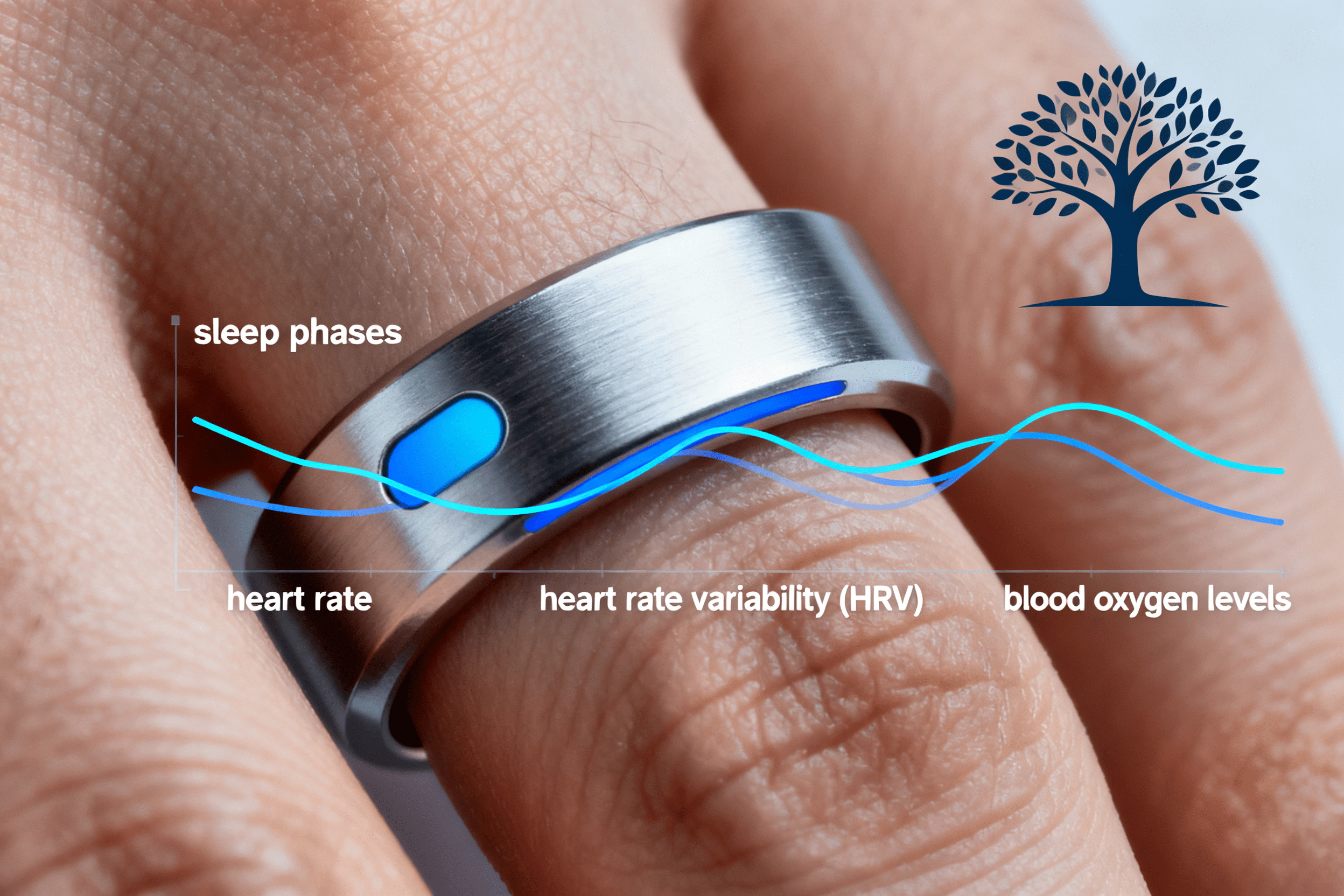
This is where these little finger gadgets get interesting. Modern smart rings can monitor sleep stages, heart rate, heart rate variability (HRV), blood oxygen levels, body temperature, and stress—all while you’re unconscious. Unlike smartwatches that need charging before you finish a Netflix binge, these things last up to a week on a single charge.
The Oura Ring, valued at roughly $11 billion and on track for $1 billion in revenue in 2025, has become the poster child for the longevity biohacking crowd. Longevity experts like Kayla Barnes-Lentz have been using Oura for years to optimize their health protocols. The appeal? Continuous, passive data collection that actually tells you whether your lifestyle choices are helping or hurting your quest to live longer.
RingConn’s Gen 2 Air even offers sleep apnea detection, checking for breathing disruptions while you sleep. Ultrahuman’s app provides behavioral insights like caffeine timing to minimize sleep disruption, and can even detect slight temperature elevations that might signal oncoming illness.
The Longevity Context: Why This Matters Now
The convergence of affordable wearable tech and cutting-edge longevity science is creating a perfect storm. For the first time in history, regular people can access the kind of detailed biometric data that was previously available only in sleep labs or research facilities.
Smart rings are becoming essential tools in what researchers call “health optimization protocols”. They’re not just tracking your sleep—they’re giving you actionable data to improve it. And since sleep affects cardiovascular health, immune function, cognitive performance, and even how quickly your brain ages, improving your sleep could be the highest-leverage health intervention available.
The rings track “readiness scores” that tell you whether your body is recovered enough to tackle intense workouts or whether you should take it easy. They monitor stress levels using temperature, heart rate, and HRV algorithms. Some even integrate bloodwork data or use AI chatbots to help identify long-term trends.
The Bottom Line
Smart rings had their breakthrough in 2025, not because they’re sexy gadgets (though they kind of are), but because they’re solving a critical problem: How do we actually track and improve the single most important behavioral factor for longevity?
With prices ranging from $199 to $499, these devices are making longevity science accessible. You don’t need a concierge doctor or membership in an exclusive biohacking club. You just need seven hours of quality sleep and a tiny computer on your finger telling you whether you’re getting it.
The sleep revolution won’t be televised—mostly because you’ll be, you know, sleeping through it. But it might just be measured, optimized, and tracked by that unassuming ring on your finger.
Sweet dreams, longevity seekers.