


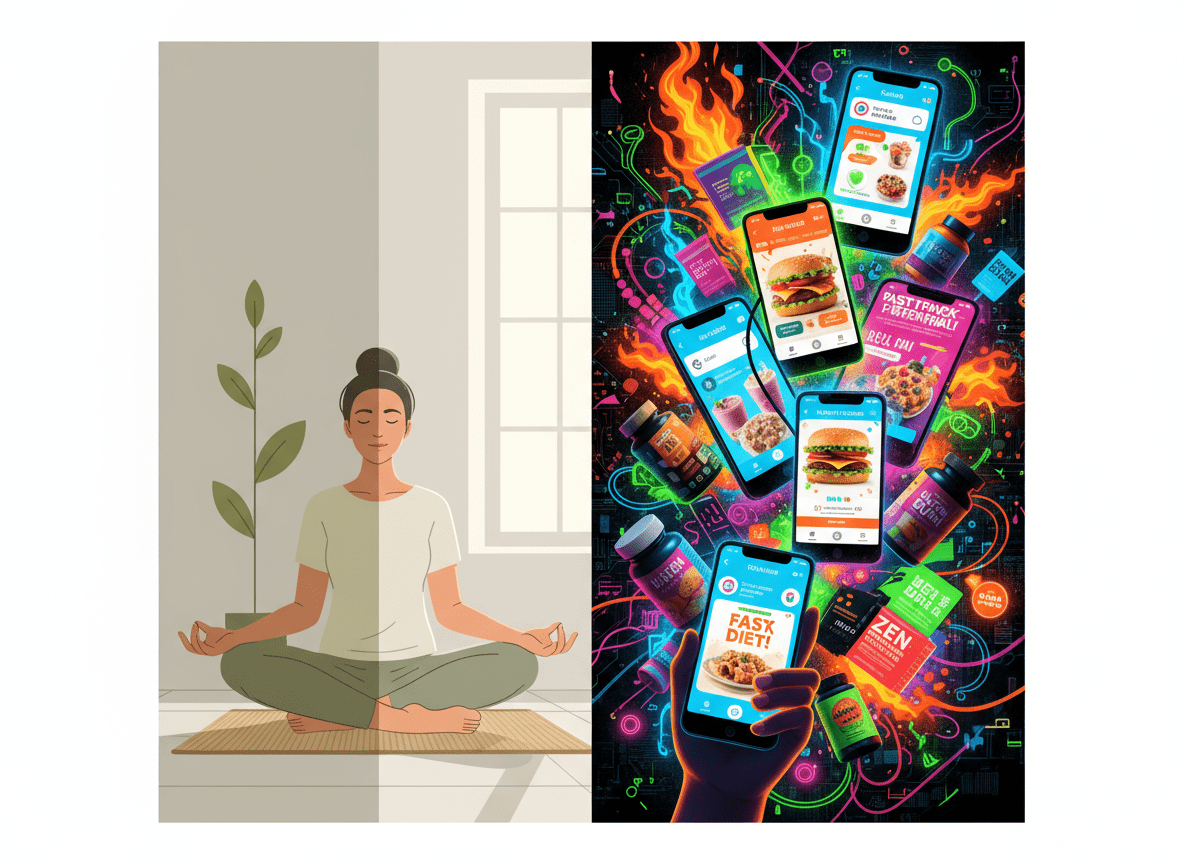
At 11:30 a.m., my stomach is loudly protesting my 16‑hour fast, while Instagram serves me a fourth ad for “fasting‑support” electrolyte powder that costs more per gram than cocaine. My phone wants me to track my ketone levels, my “fasting window,” and my “metabolic age” on three different apps. Fasting is less about food than about refusing to let the attention economy feed you—literally and algorithmically.
What I actually do
- 16:8 schedule, strictly timed: I eat between 12 p.m. and 8 p.m., fast from 8 p.m. to 12 p.m. the next day. No breakfast, black coffee only in the morning. Dinner ends by 8 p.m., no exceptions, no “just one bite” nonsense.
- Daily fermented foods during eating window: Sauerkraut, kimchi, kefir, homemade yogurt. Not because some guru told me to, but because my gut feels better and my energy is more stable when I eat them consistently.
- No apps, no tracking, no ketone strips: I use a basic timer on my phone to mark the 16‑hour window. That’s it. No gamification, no streaks, no “fasting score.” If I can’t feel the difference, measuring it won’t help.
- Exceptions are planned, not accidental: Social dinners, travel, or a morning espresso with a friend—I adjust the window forward or backward, but I don’t pretend a croissant at 10 a.m. is “technically still fasting” because I had MCT oil in my coffee.
- What I tried and abandoned: 18:6 felt like performance art, not a protocol. I was irritable, distracted, and my workouts suffered. I also ditched “bulletproof coffee” and other “fasting hacks”—if you’re adding 400 calories of butter to your coffee, you’re not fasting, you’re having breakfast in liquid form.
What the industry sells
- Fasting apps with subscription models: Track your “fasting streak,” earn badges, get reminders to break your fast with a sponsored protein bar. Gamifying hunger is peak 2026.
- “Fasting‑support” supplements: Electrolyte powders, exogenous ketones, and “autophagy boosters” marketed as essential for “real fasting.” Most cost €40–€60 per bottle and are built on the premise that your body can’t handle 16 hours without breakfast unless you buy their powder.
- Wearables and metabolic trackers: Continuous glucose monitors, ketone breath analyzers, and smart rings that claim to tell you the exact moment you’ve entered “fat‑burning mode.” Spoiler: if you need a €300 device to tell you you’re hungry, you’ve lost the plot.
- Influencer meal plans and “fasting protocols”: Sold as PDFs for €29.99, these are often just repackaged common sense with a motivational quote and a photo of someone’s abs. If you listen to longevity influencers, skipping breakfast is impossible without a curated 47‑step morning routine involving bone broth, adaptogens, and mindfulness journaling.
- “Breaking the fast” product lines: Protein cookies, collagen shots, and meal‑replacement shakes specifically marketed for the 30‑second window when your fast ends, because apparently eating real food is too complicated.
Signal vs noise
Signal
- 16:8 time‑restricted eating reduces body weight and improves metabolic markers: A 2025 meta‑analysis of 99 clinical trials across 6,500+ participants found that intermittent fasting, particularly 16:8, significantly reduces body weight, improves blood pressure, glucose, and cholesterol levels.
- Autophagy activation during fasting is real: Short‑term fasting (24–48 hours) upregulates autophagy in hepatic and neuronal tissues, a cellular “housekeeping” process that clears damaged proteins and organelles. 16‑hour fasts likely trigger milder but consistent autophagy responses.
- Early eating windows may be more effective: Recent studies suggest eating earlier in the day (breakfast‑to‑early‑dinner) rather than skipping breakfast yields better results for fat loss, diastolic blood pressure, and fasting glucose. My protocol skips breakfast, which works for my schedule, but the data favors the inverse.
Noise
- “Fasting supplements” are mostly marketing: Your body doesn’t need electrolyte powders, exogenous ketones, or autophagy boosters to handle a 16‑hour fast. These products target insecurity, not deficiency.
- The cardiovascular death scare was overblown: A 2024 study linked 16‑hour fasting to a 91% higher risk of cardiovascular death, but it was an observational survey (NHANES data) with confounding variables and no mechanistic explanation. The media ran with it anyway.
- Fasting apps and trackers are behavioral manipulation: Most are designed to create dependency, not autonomy. Badges, streaks, and notifications turn fasting into a game where the app, not your body, decides when you’ve succeeded.
The cyber angle
Intermittent fasting sits at the intersection of biohacking, surveillance capitalism, and the attention economy. Your fasting window becomes data: tracked, monetized, and sold back to you as “insights.” Apps nudge you toward sponsored products, wearables surveil your glucose spikes, and influencers turn hunger into content.
The wellness industry has figured out how to financialize the absence of eating—not by selling food, but by selling the infrastructure around not eating: apps, supplements, tracking devices, and community memberships. Meanwhile, platforms profit from your distraction: Instagram wants you scrolling through food ads during your fasting window, TikTok wants you watching meal‑prep videos you’ll never cook, and YouTube wants you bingeing longevity podcasts instead of just sitting with discomfort. Fasting used to be free. Now it’s a subscription service.
Closing question
If your fasting protocol needs a constant stream of content, apps, and supplements to justify it, are you really fasting from anything that matters?