



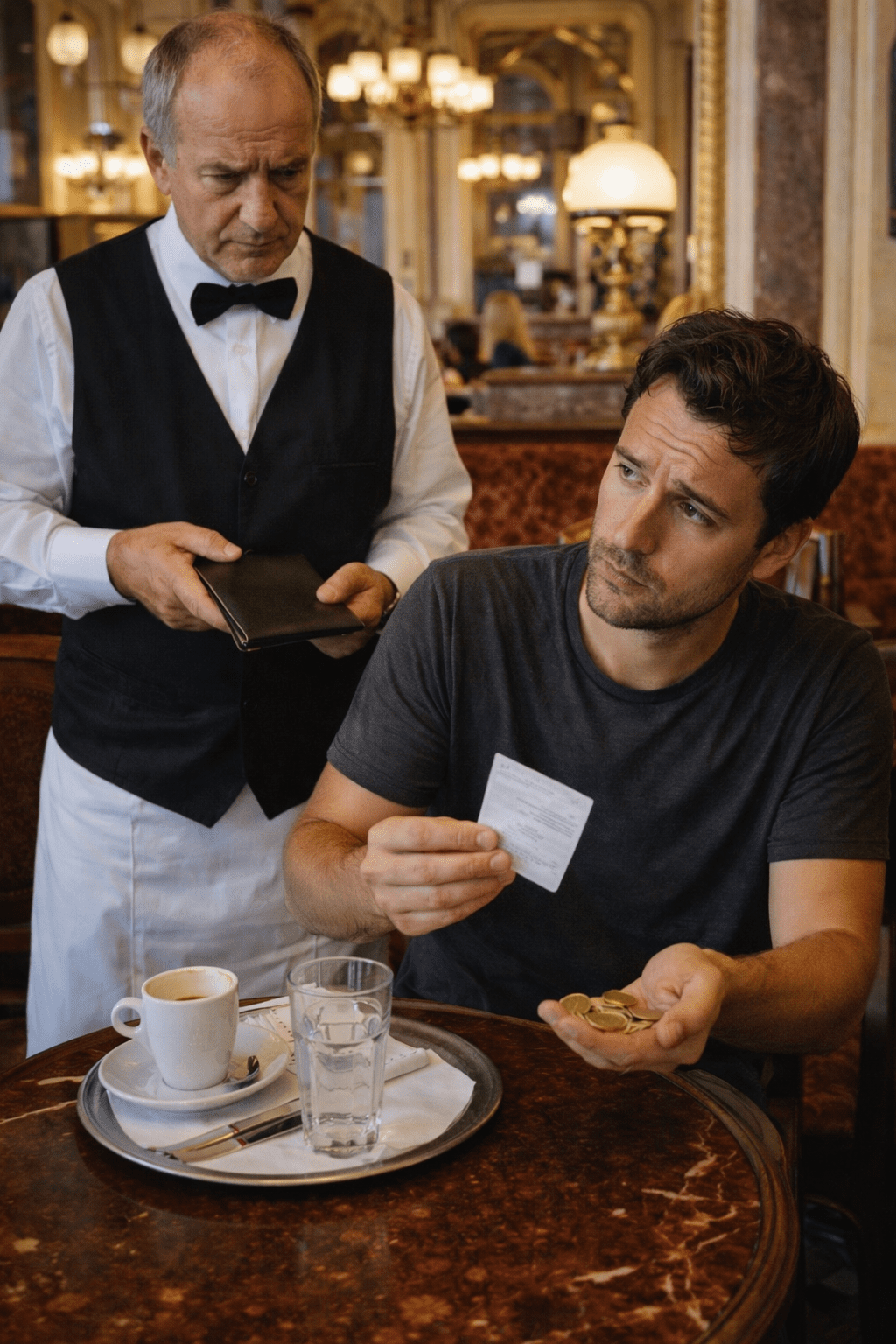
When I’m traveling across Europe, one small question follows me almost everywhere: Should I tip here — or not?
The uncertainty isn’t new to me. It just becomes louder when I’m on the road.
Growing Up With a Different Reference Point
I grew up in Vienna.
Vienna has a very particular service culture. Not unfriendly by default — but certainly not overly accommodating either.
Waiters don’t perform. They don’t smile on command. And they don’t depend on tips to be polite.
Of course, this doesn’t apply to everyone. But the general tone is clear: service is professional, not emotional.
Is Not Tipping a Faux Pas?
In Vienna, not tipping is usually not a social offense.
It might be noticed. It might be silently judged. But it rarely causes conflict.
Service staff are paid wages. Tipping is appreciated — not required.
That reference point shaped how I think about tipping. And it’s exactly why traveling makes things confusing.
What Changes When You Leave Home
Outside of Vienna, the signals become harder to read.
In some cities, not tipping feels completely normal. In others, it suddenly feels cheap — even when no one explicitly expects it.
The rules aren’t written. They’re sensed.
And when you move between cultures, that intuition resets.
The Moment of Hesitation
The bill arrives. The waiter waits.
And I pause.
Not because I don’t want to tip — but because I’m unsure what the gesture means in that specific place. Is it gratitude? Is it expected? Is it unnecessary?
That hesitation repeats itself in cafés, bars, and restaurants across Europe.
Why Rounding Up Feels Like the Safest Option
Over time, I developed a strategy.
I round up.
Not dramatically. Not symbolically. Just enough to acknowledge the interaction.
A coffee becomes the next full euro. A lunch bill gets a few extra coins. Dinner ends quietly, without calculation.
Same Continent, Different Signals
What makes European tipping difficult isn’t complexity — it’s inconsistency.
In cafés, tipping feels optional. In bars, it often disappears. In restaurants, it becomes situational.
The same city can apply three different logics in a single evening.
Why No One Explains the Rules
What strikes me most is how rarely tipping is discussed.
Locals don’t explain it. Staff don’t clarify it. And signs don’t mention it.
The system relies on social awareness rather than instruction.
That works — until you travel.
What I’ve Learned to Do Instead
I stopped searching for clear rules.
Instead, I aim for moderation.
If service feels personal, I leave something. If it feels purely transactional, I don’t force it.
It’s not perfect. But it allows me to move on without overthinking every bill.
Final Thought
European tipping culture isn’t confusing because it’s complicated.
It’s confusing because it’s implicit.
Growing up in Vienna taught me that not tipping isn’t a scandal. Traveling taught me that context changes everything.
In the end, tipping in Europe isn’t about money. It’s about navigating the moment without making it uncomfortable.