



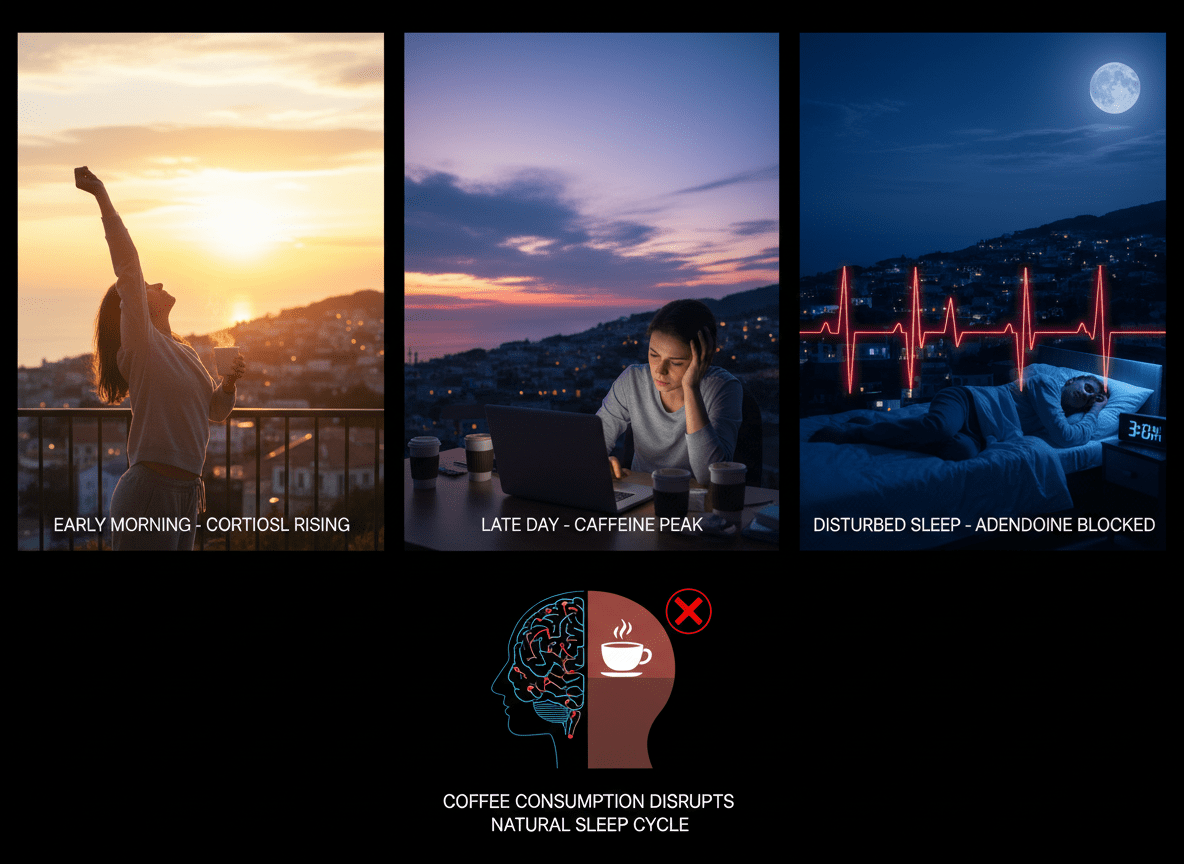
If you’re reading this with a coffee in hand, you’re in good company—and possibly adding years to your life. But before you pour a fifth cup and call it a longevity hack, let’s talk about what the science actually says about coffee, body fat, diabetes risk, and whether your afternoon espresso is sabotaging your sleep (and your health strategy).
Spoiler: coffee is one of the few things that’s actually as good as it tastes. But timing matters more than you think.
The Body Fat Connection: Caffeine as a Fat-Burning Signal
A 2023 study from the Karolinska Institute in Sweden, the University of Bristol, and Imperial College London used genetic markers to establish something remarkable: higher caffeine levels in your blood are associated with lower body fat and reduced risk of type 2 diabetes.
The researchers analyzed data from nearly 10,000 people and focused on genetic variations in the CYP1A2 and AHR genes, which control how fast your body breaks down caffeine. People with variants that slow caffeine metabolism have higher caffeine levels in their blood for longer periods—and they tend to have lower BMI and less body fat.
Here’s the key finding: genetically predicted higher plasma caffeine concentrations were associated with lower BMI, lower whole-body fat mass, and a reduced risk of type 2 diabetes. About half of caffeine’s protective effect against diabetes was mediated through body fat reduction.
The mechanism? Caffeine increases thermogenesis (your body’s heat production) and fat oxidation (turning stored fat into energy). It essentially signals your metabolism to burn more and store less.
The researchers suggested that calorie-free caffeinated drinks could be explored as a tool for reducing body fat levels. That’s academic-speak for: black coffee might help you stay leaner without adding calories.
Coffee and Diabetes: The Evidence Keeps Piling Up
The connection between coffee and diabetes prevention isn’t new, but the evidence keeps getting stronger.
A comprehensive 2025 review found that habitual coffee consumption—typically 3 to 5 cups daily—results in a 20-30% lower risk of developing type 2 diabetes. Both caffeinated and decaffeinated coffee showed similar protective effects, suggesting that compounds beyond caffeine—particularly polyphenols—play key roles.
These coffee polyphenols improve insulin sensitivity, reduce inflammation, provide antioxidant protection, and enhance glucose metabolism. One major target appears to be the liver, where coffee improves fat oxidation and lowers the risk of fatty liver disease. Another critical effect is preservation of beta cell function—the cells in your pancreas that produce insulin—through improved mitochondrial function and reduced cellular stress.
A long-term study confirmed that coffee drinkers had a 66% lower risk of developing type 2 diabetes compared to non-drinkers. Higher caffeine intake was also associated with a borderline significant reduction in prediabetes risk.
Translation: if you’re worried about metabolic health, coffee is one of the most evidence-backed dietary interventions you can make.
The Longevity Boost: How Coffee Adds Years to Your Life
Multiple large-scale studies tracking millions of people have found that moderate coffee consumption is linked to longer life and healthier aging.
A 2025 meta-analysis of 85 studies found that drinking 3 cups of coffee daily could add an extra 1.8 years to your life. The lowest overall mortality risk was observed at around 3.5 cups daily, and both regular and decaffeinated coffee showed these protective associations.
A 30-year Harvard study tracking over 47,000 women found that women who consumed the highest amounts of caffeine (about 7 cups of coffee daily) had a 13% greater likelihood of healthy aging compared to those who drank less than one cup per day. Each additional cup was associated with a 2-5% increased chance of aging well.
Another 2025 review concluded: “Moderate coffee consumption, typically 3 to 5 cups a day, is linked to increased longevity and reduced risks of many major diseases, including heart disease, stroke, type 2 diabetes, respiratory illnesses, and cognitive decline”.
A fascinating 2023 study from Singapore found that each additional cup of coffee consumed at midlife was associated with a 30% reduction in frailty risk decades later. This suggests coffee’s benefits compound over time—today’s cup protects tomorrow’s strength.
The evidence is consistent and overwhelming: moderate, stable coffee consumption fundamentally alters biology in ways that predict longer life, sharper minds, and more resilient bodies.
The Sleep Problem: When Coffee Becomes a Circadian Disruptor
Here’s where timing becomes critical. Coffee’s longevity benefits come with a significant catch: evening caffeine consumption disrupts your circadian rhythm and delays sleep.
A landmark 2015 study published in Science Translational Medicine found that consuming a double espresso 3 hours before bedtime delayed the circadian melatonin rhythm by approximately 40 minutes. That’s nearly half the magnitude of the phase delay caused by 3 hours of bright light exposure.
Caffeine doesn’t just keep you awake—it literally shifts your internal clock backward by acting on adenosine receptors and altering cellular timekeeping mechanisms. This effect is dose-dependent: higher concentrations of caffeine cause greater circadian disruption.
The implication: if you drink coffee in the late afternoon or evening, you’re not just delaying sleep—you’re disrupting the fundamental timing system that regulates metabolism, hormone production, and cellular repair.
Poor sleep quality undermines every other longevity strategy. It increases inflammation, impairs glucose metabolism, accelerates cognitive decline, and shortens lifespan. If your coffee habit is costing you sleep quality, you’re trading short-term energy for long-term damage.
Timing Matters: When to Drink Coffee for Maximum Benefit
A 2025 NIH study on coffee drinking timing and mortality found that when you drink coffee matters for health outcomes. The research suggests that morning coffee consumption aligns better with circadian rhythms and metabolic processes than afternoon or evening drinking.
The circadian clock regulates metabolism, and caffeine consumed later in the day can interfere with the natural timing of metabolic processes, potentially diminishing coffee’s health benefits while amplifying sleep disruption.
Given that caffeine has a half-life of 3-5 hours (meaning half of it is still in your system after that time), and can delay your circadian clock by 40 minutes when consumed 3 hours before bed, the math is simple:
If you want quality sleep and metabolic benefits, cut off caffeine by early afternoon—ideally no later than 2 PM.
How to Integrate Coffee into a Longevity Strategy
Based on the evidence, here’s a practical framework for using coffee as part of a longevity protocol:
1. Aim for 3-5 cups daily, consumed in the morning and early afternoon
The sweet spot for longevity and metabolic benefits appears to be 3-5 cups spread across the morning and early afternoon. This aligns with the body’s natural cortisol and metabolic rhythms.
2. Stop drinking coffee by 2 PM (earlier if you’re sensitive)
To protect sleep quality and circadian rhythm, establish a hard cutoff at least 6-8 hours before bedtime. If you go to bed at 10 PM, your last coffee should be at 2 PM or earlier.
3. Drink it black or with minimal additions
The metabolic benefits come from coffee itself—not from sugar, cream, or flavored syrups. If you’re adding 200 calories of sweeteners and cream to each cup, you’re negating the body fat benefits.
4. Both caffeinated and decaffeinated work
If you’re caffeine-sensitive or want an afternoon coffee without the sleep disruption, decaf provides similar benefits for diabetes prevention and longevity. The polyphenols do much of the heavy lifting.
5. Consistency matters more than intensity
A 2025 study found that stable coffee consumption patterns over decades provided stronger protective effects than sporadic or variable intake. Make it a daily ritual, not an occasional indulgence.
6. Pair it with other longevity behaviors
Coffee isn’t a magic bullet. The Harvard study accounted for factors like overall diet, exercise, and smoking status. Coffee works best when it’s part of a broader health strategy—not a substitute for one.
The Bottom Line: Coffee Is a Rare Win
Coffee is one of the few dietary interventions where the evidence for longevity, metabolic health, and disease prevention is overwhelming and consistent. It reduces body fat, lowers diabetes risk, protects against cognitive decline, and adds measurable years to your life.
But only if you respect the circadian timing constraint. Evening coffee disrupts the very biological rhythms that coffee is supposed to optimize.
If you’re chasing longevity, the rule is simple: drink coffee liberally in the morning, moderately in the early afternoon, and never in the evening.
Your future self—leaner, sharper, and still sleeping well at 90—will thank you.
How do you drink your coffee? Morning ritual or all-day fuel? Drop a comment and let’s compare protocols.